

How to Increase Engine Longevity With Smarter Maintenance
Last Updated: November 4, 2026
Quick Summary
You increase engine longevity by changing oil every 5,000 miles or six months, replacing filters and fluids on a mileage-based schedule, and avoiding short trips that never let oil reach operating temperature. Reading live OBD-II data and oil analysis catches wear before it becomes a rebuild.
- Consistent oil changes can add 50,000 to 100,000 miles to an engine's lifespan.
- Change oil every 5,000 miles or six months instead of trusting 10,000-mile manual intervals.
- Replace air filters every 12,000 to 15,000 miles to maintain the air-fuel ratio.
- Avoid redlining until the engine reaches operating temperature to reduce metal-to-metal contact.
- Read pending codes at every oil change to catch misfires before they damage the catalytic converter.
Table of Contents
- Why Engine Longevity Comes Down to Wear, Not Luck
- Oil Change Intervals: The 5,000-Mile Rule That Beats the Manual
- The Benefits of Oil Additives for Engine Life
- The Impact of Short Trips on Engine Health
- Your Engine Maintenance Schedule: Filters, Fluids, and Ignition
- High-Performance Engine Protection Tips for Track and Towing
- Advanced Diagnostic Tools That Catch Wear Early
- Choosing the Right VPO Oil Vitalizer for Your Build
- Frequently Asked Questions
Why Engine Longevity Comes Down to Wear, Not Luck
Engine longevity is the accumulated result of thousands of small decisions, not a lottery draw. According to CF Grower's 2026 report on extending vehicle life, consistent oil changes alone can add 50,000 to 100,000 miles to an engine's lifespan. That is the difference between a car that dies at 120,000 miles and one still pulling strong past 200,000.
Engines often fail early when service intervals are skipped, when short trips never let oil reach temperature, and when owners trust a manual's 10,000-mile interval without question.
Below, we break down the maintenance decisions that actually move the needle, from oil intervals to cold starts to the diagnostic tools that catch wear before it becomes a rebuild.
Oil Change Intervals: The 5,000-Mile Rule That Beats the Manual
The 5,000-mile rule beats the manual because oil degrades faster than most owner's manuals admit. While some manuals suggest 10,000-mile intervals, Euro Performance's 2026 longevity guide advises changing oil every 5,000 miles or six months for maximum engine health. That shorter interval keeps viscosity stable and limits sludge buildup in the combustion chamber.
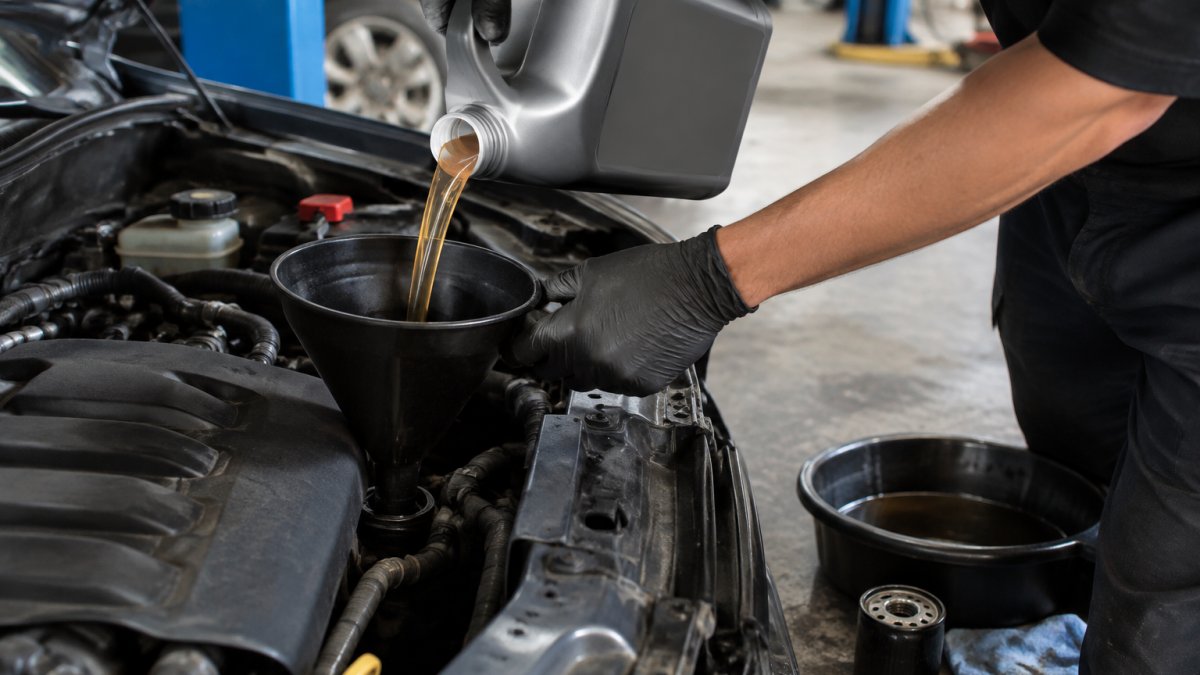
Why the gap? Manuals are written for the warranty period, not the engine's second decade. Contaminants accumulate, thermal breakdown accelerates, and by mile 7,000 the additive package is doing less friction reduction than it did at mile 2,000. A common mistake is treating the manual as a target rather than a ceiling.
Synthetic vs. Conventional Oil Longevity
Synthetic oil resists thermal breakdown and viscosity loss longer than conventional oil, which matters most under high engine load. For towing, track days, or any build pushing beyond stock power, synthetic is the baseline, not the upgrade. Conventional oil works for light-duty driving, but it shears down faster under heat.
Weighing additive brands on top of that? Our Lucas Oil vs STP comparison breaks down how common additives differ before you commit.
The Benefits of Oil Additives for Engine Life
Oil vitalizers are formulated to work with the oil's friction-modifying and anti-wear properties, particularly under load, and VPO vitalizers use a friction-modifying additive system designed for road and track use.
If you want the deeper technical explanation of what these formulations actually do inside the engine, read our guide to the benefits of oil vitalizer additives.
The Impact of Short Trips on Engine Health
Short trips are harder on an engine than long highway runs. A 10-minute commute never lets oil reach operating temperature, so moisture and fuel dilution stay trapped in the crankcase. Over months, that accelerates sludge buildup and corrosion, and it is one of the most overlooked causes of premature wear.
The fix is simple: consolidate errands, take the longer route when the engine is cold, and shorten your service interval if your driving is mostly urban. Idle time counts too. Sitting in traffic does not warm oil the way sustained driving does.
Cold Start Best Practices
Cold start is when the most metal-to-metal contact happens, because oil has drained from critical surfaces overnight. Autos Today's 2026 guidance recommends avoiding redlining until the engine reaches operating temperature and letting it warm properly before heavy load. Gentle driving for the first few minutes does more for longevity than any additive.
Your Engine Maintenance Schedule: Filters, Fluids, and Ignition
An engine maintenance schedule should tie every service interval to a mileage marker so nothing gets skipped, but the interval itself matters less than the mechanism behind it. A schedule you understand is a schedule you actually follow. Here is what each line item is protecting and why the number is what it is.
| Service | Interval | Mechanism It Protects |
|---|---|---|
| Oil and filter change | 5,000 miles / 6 months | Prevents sludge buildup and viscosity breakdown; the filter captures wear particles before they circulate |
| Air filter replacement | 12,000-15,000 miles | Maintains the air-fuel ratio; a restricted intake forces the engine to work harder and can foul the mass airflow sensor |
| Coolant flush | Per manufacturer, typically 30,000-50,000 miles | Restores heat-transfer efficiency and prevents gasket failure from degraded coolant chemistry |
| Spark plug replacement | 30,000-100,000 miles by type | Maintains combustion chamber efficiency and spark plug gap; worn plugs load the ignition system |
| Fuel filter replacement | 20,000-30,000 miles | Protects injectors from particulates and preserves fuel efficiency |
Air filter replacement is recommended every 12,000 to 15,000 miles, according to The Detailing Mafia's 2024 maintenance guidelines, and that interval matters because a clogged air intake system forces the engine to work harder. In dusty climates or on gravel roads, most practitioners find the filter loads up faster than the mileage suggests, so inspect it at every oil change rather than trusting the calendar.
Cooling system care deserves its own line item. A coolant flush removes contaminants that degrade heat transfer, and ignoring it is how engines end up overheating on a hot day with the gauge climbing. Coolant chemistry also matters: the corrosion inhibitors in long-life coolants deplete over time, and once they are gone the radiator, water pump, and heater core become the corrosion sites. Check hoses and the radiator cap at the same time, because a weak cap lowers system pressure and drops the boiling point of the coolant.
Spark plugs are not a single interval. Copper plugs typically need replacement around 30,000 miles, platinum plugs stretch to roughly 60,000, and iridium plugs can run to 100,000 miles, but the gap widens as the electrode wears. A worn plug gap forces the ignition coil to produce higher voltage, which is how a cheap plug replacement turns into a coil pack job.
VPO Liquid Boost - STREET Oil Vitalizer →
Fuel filter replacement protects the injectors, and injector health is a combustion chamber issue, not just a fuel-delivery issue. A partially clogged injector leans out one cylinder, which raises combustion temperature in that cylinder and stresses the piston and valves. On returnless fuel systems the filter is often in the tank and rated for a long interval, so confirm the design before scheduling the service.
Watch out: treating the manual's maximum interval as the target rather than the ceiling is the most common scheduling mistake. Severe-service schedules exist for a reason, and short trips, towing, and dusty conditions all push you onto the shorter column.
High-Performance Engine Protection Tips for Track and Towing
High-performance driving and heavy towing both raise engine load past what daily driving demands, and both punish weak lubrication. Aggressive driving, specifically rapid acceleration and sustained high RPMs, is identified by Goldfarb Inc.'s 2026 analysis as a primary factor in engine wear and reduced component lifespan.
For track use, the priorities are oil temperature monitoring, a fresh oil change before every event, and staying within towing capacity and rated drivetrain limits when hauling. For towing, watch transmission and coolant temperatures as closely as oil pressure.
If track days are on your calendar, our engine protection guide for track days covers the full prep checklist.
Advanced Diagnostic Tools That Catch Wear Early
An OBD-II scanner is the cheapest insurance an engine owner can buy, but most people only plug one in after a warning light appears. The real value is in reading live data while the engine is healthy, so you have a baseline to compare against when something drifts. A scanner that only reads codes is a code reader; a scanner that shows live data is a diagnostic tool.
Start by recording a baseline at operating temperature: coolant temperature at idle and at cruise, short-term and long-term fuel trims at idle and at 2,500 RPM, mass airflow readings at idle, and ignition timing advance. Save those numbers. When fuel trims climb from near zero to plus or minus 10 percent, you are watching a vacuum leak, a failing sensor, or a fuel-delivery problem develop before it sets a code.
Pending codes are the other half of the value. A pending code is a fault the ECU has seen once but not confirmed, and it is exactly the window where a misfire is still a cheap ignition coil rather than a cooked catalytic converter. Read pending codes at every oil change, not just when the light comes on.
Oil analysis is the complementary tool, and it is the only way to see inside the engine without disassembly. A sample at each change tracks wear metals like iron, copper, and aluminum, plus fuel dilution, coolant contamination, and viscosity. A single report is a snapshot; a trend across three or four reports is a diagnostic. Rising iron with stable aluminum points to ring or cylinder wear, while rising copper often points to bearing wear. Most labs will flag a sample against universal averages for your engine family, which is where the interpretation starts.
Watch out: ignoring a flashing check engine light is how a $200 ignition coil becomes a $3,000 catalytic converter replacement. A flashing light means the misfire is actively dumping unburned fuel into the exhaust, and the converter is the component paying for the delay.
For a hands-on walkthrough of reading early symptoms, our DIY engine sputtering diagnostic guide shows how to trace misfires and rough idle back to the source.
Choosing the Right VPO Oil Vitalizer for Your Build
The right oil vitalizer depends on your engine and how you drive it, not on a generic "one size fits all" label. VPO Liquid Boost vitalizers are built around a proprietary friction-modifying additive system proven in road and track applications, and each variant targets a specific driving demand.
- STREET ($49.99): For modern daily-driven engines. Improves fuel economy and reduces operating temperatures while protecting against viscosity breakdown.
- HOT ROD ($54.99): For modern and classic engines running heavier-weight oils across varied conditions.
- RACE ($59.99): For competition-only engines without catalytic converters.
- DIESEL ($54.99): For modern diesel lubricants under heavy-duty conditions.
Every VPO vitalizer is non-chlorinated and fully compatible with both mineral and synthetic oils. Browse the full VPO Liquid Boost vitalizer lineup to match one to your build.
Frequently Asked Questions
How do I make my engine last longer?
Change oil at regular intervals, such as every 5,000 miles or six months, rather than stretching to the longest interval a manual allows. Replace air filters every 12,000 to 15,000 miles, avoid redlining a cold engine, and keep towing within rated capacity. Engine longevity is mostly the sum of small, repeated habits rather than one big fix.
Does high-performance driving reduce engine lifespan?
It can, but the habits around the driving matter more than the driving itself. Goldfarb Inc. identifies rapid acceleration and sustained high RPMs as primary factors in engine wear. Warm the engine fully before hard pulls and shorten service intervals on track-driven cars.
Can a car engine last 500,000 miles?
Some do, and the pattern behind them is consistent: frequent oil and filter changes, cooling system care, and no extended periods of abuse. Reaching 500,000 miles is possible with disciplined service intervals and attention to dashboard warning lights.
What are the most critical fluids for engine longevity?
Engine oil is first, since it handles lubrication, cooling, and contaminant suspension. Coolant comes second because thermal breakdown and overheating damage gaskets and warped heads fast. Transmission and differential fluid protect the drivetrain that carries engine load. Check oil level weekly, watch coolant condition, and follow the manufacturer's service interval for every fluid. Skipping coolant flushes is one of the most common causes of premature engine failure.
Your engine will not tell you it is wearing out until the damage is expensive. Shorten your oil intervals, respect cold starts, and add a vitalizer that holds viscosity under load. The Boost Pros stocks VPO Liquid Boost vitalizers engineered to reduce friction, lower operating temperatures, and protect against thermal breakdown, with variants for street, hot rod, race, and diesel builds. Get started with The Boost Pros and give your engine the protection it needs to last.
