

Benefits of Oil Vitalizer Additives: What They Do
Table of Contents
- What Oil Vitalizer Additives Are and How They Differ From Standard Oil Additives
- The Core Benefits of Oil Vitalizer Additives in a Performance Engine
- Do Oil Additives Improve Fuel Economy? What to Realistically Expect
- Oil Additives for Engine Protection: Wear, Noise and Longevity
- Oil Additive Compatibility With Synthetic Oil and Modern Engines
- How to Use Engine Oil Additives: Dosage, Application and Monitoring
- When Not to Use an Oil Vitalizer
- Conclusion
- Frequently Asked Questions
Last Updated: October 14, 2026
What Oil Vitalizer Additives Are and How They Differ From Standard Oil Additives
An oil vitalizer is a synthetic oil treatment engineered to improve how your existing oil performs, not to replace it.

A standard oil additive boosts one trait, such as viscosity or cleaning power. An oil vitalizer is a full synthetic formulation built to improve lubrication, reduce friction, and protect against breakdown across the whole oil-change interval.
Vitalizer vs. Common Off-the-Shelf Additive
- Standard additive: targets one issue, like a thicker oil film or a detergent boost
- Oil vitalizer: works on friction, heat, oxidation, and wear at the same time
- Standard additive: often a quick fix for an old or tired engine
The Core Benefits of Oil Vitalizer Additives in a Performance Engine
The core benefits of oil vitalizer additives show up in three places: less friction, lower heat, and longer oil life, the things that decide whether a performance engine finishes the session or parks early.

Friction Reduction and Horsepower
Friction is the enemy of power. When metal-to-metal contact increases, your engine fights itself.
A vitalizer adds a friction-modifying layer to the oil film, helping parts slide instead of grind for smoother operation and less power lost to heat.
That isn't free horsepower, but reducing friction-robbing wear helps your engine hold the power it already makes under hard use.
Temperature, Oxidation and Oil Life
Heat breaks oil down. When oil oxidizes, it thickens, loses its protective film, and stops doing its job.
A quality vitalizer improves viscosity-temperature performance, so the oil holds its strength when hot and resists thermal and oxidative degradation from shear stress.
The payoff is longer oil life and steadier protection across the whole change interval.
Do Oil Additives Improve Fuel Economy? What to Realistically Expect
Yes, oil additives can improve fuel economy, but the gains are modest and depend on your setup. Here's how fuel savings happen, how to measure them, and what variables move the needle.
The Mechanism: How Friction Reduction Translates to Fuel Savings
Fuel economy gains from oil vitalizers come from one pathway: reducing friction between moving engine parts. When friction drops, the engine wastes less energy overcoming resistance, so more fuel energy turns the wheels instead of heating oil and metal.
A vitalizer adds a friction-modifying layer to the oil film, helping parts slide instead of grind, so the engine works less to produce the same output, slightly lower fuel consumption under consistent conditions.
Realistic Gains: What the Numbers Actually Look Like
Anyone promising huge mileage numbers is selling a story the physics doesn't support. Realistic improvements from a quality oil vitalizer typically fall in the low single digits, often 1% to 3% under favorable conditions.
At 25 MPG, that's 25.3 to 25.8 MPG, roughly 4 to 12 extra miles per 15-gallon tank. Not nothing, but not a reason to buy on its own.
Several variables determine where you land in that range:
- Baseline engine condition: A well-maintained engine with clean oil and tight tolerances sees smaller gains because it already minimizes friction. A tired engine with more blow-by or worn surfaces may see slightly larger improvements.
- Driving cycle: Stop-and-go driving shows more benefit than steady highway cruising because constant acceleration and deceleration create more friction events.
- Oil condition: Fresh, high-quality synthetic oil already has a strong additive package, so the marginal gain is smaller than with a basic conventional oil near the end of its change interval.
How to Measure Fuel Economy Changes Yourself
To know whether a vitalizer helps your fuel economy, you need a consistent measurement method, eyeballing the fuel gauge won't cut it.
Step 4: Account for variables. Switching fuel blends, changing tires, or altering your commute can mask or exaggerate any additive effect, so note them.
Drivers often see a small, consistent improvement in the first few tanks, then it levels off.
What Fuel Economy Claims to Distrust
Be skeptical of any product claiming double-digit percentage fuel savings. Internal combustion physics doesn't allow massive gains from a single oil additive, so 10% or 20% promises mean unrealistic measuring or fabrication.
Distrust claims that don't specify the baseline: 5% over badly degraded oil isn't the same as 5% over fresh synthetic.
The Real Value: Protection First, Fuel Savings as a Bonus
The real value of a vitalizer is protection and consistency, not a magic fuel pill. Treat fuel savings as a bonus: better wear protection, more stable oil performance, and a possible small fuel economy bump is realistic.
Oil Additives for Engine Protection: Wear, Noise and Longevity
Oil additives for engine protection work by strengthening the oil film between moving parts: a stronger film means less wear, quieter running, and longer engine life. But not all additives protect the same way.
How a Vitalizer Protects Differently Than a Standard Additive
A standard anti-wear additive relies on a single chemistry, such as zinc dialkyldithiophosphate (ZDDP) or a molybdenum compound, to form a sacrificial layer on metal surfaces, one-dimensional protection against one type of wear under limited conditions.
An oil vitalizer instead uses a complete friction-modifying system designed to maintain a durable, low-shear film across the entire oil-change interval, resisting breakdown from heat, pressure, and shear stress.

Wear Protection: What Actually Happens at the Metal Surface
Wear protection is the headline benefit. When metal-to-metal contact drops, so does the slow grinding that shortens engine life. Over thousands of miles, that difference adds up.
That's why a vitalizer can outperform a simple anti-wear additive: it's not about adding zinc or moly, but maintaining a protective film across the full range of temperatures and pressures your engine sees.
Engine Noise: What You Can Realistically Expect
Engine noise tells the same story: a tired oil film lets parts rattle and tick, and restoring the film usually brings smoother operation.
Realistically, a vitalizer can reduce light ticking or tapping from hydraulic lifters and valvetrain components, especially in higher-mileage engines.
Don't expect a vitalizer to eliminate heavy knocking, piston slap, or timing chain rattle, those are mechanical issues requiring repair, not lubrication fixes.
VPO Liquid Boost - STREET Oil Vitalizer →
Longevity: The Payoff You Can't See Day to Day
Longevity is the payoff you can't see day to day, you notice it years later, when the engine is still tight and strong.
Engine longevity comes down to reducing cumulative wear.
You can't easily measure this without tear-down or oil analysis. But you can monitor indirect indicators: oil pressure stability, oil consumption between changes, and engine noise over time.
The Unique Angle: Why Vitalizers Are Built for Modern Engines
Most articles on oil additives treat all engines the same. But modern engines, with variable valve timing, turbochargers, direct injection, and tight tolerances, place different demands on oil than older pushrod engines did.
That's why compatibility matters as much as protection: a vitalizer that protects a flat-tappet camshaft but fouls a catalytic converter isn't a win.
Oil Additive Compatibility With Synthetic Oil and Modern Engines
Oil additive compatibility with synthetic oil is one of the biggest worries we hear from customers.
VPO Liquid Boost vitalizers are non-chlorinated and fully compatible with mineral and synthetic oils.
Modern engines are fussy, tight tolerances, variable valve timing, and emissions gear that doesn't forgive the wrong chemistry.
Before you add anything, check your owner's manual. Manufacturers set oil specs for a reason.
For the latest guidance on oil and emissions standards, the U.S. Department of Energy vehicle technology office publishes plain-language resources worth a look.
How to Use Engine Oil Additives: Dosage, Application and Monitoring
How to use engine oil additives comes down to three steps: dose it right, apply it clean, and monitor the result. Get any wrong and you won't see the benefit.
Total time: about 15 minutes. Difficulty: beginner.
What You'll Need
- One bottle of the correct vitalizer for your engine
- A funnel
- Clean rags
Step 1: Match the Product to Your Engine [Time: 2 minutes]
Pick the vitalizer built for your setup. Street, race, hot rod, and diesel engines have different needs; the wrong one wastes money and can underperform.
Step 2: Check Your Oil Level [Time: 3 minutes]
Add the vitalizer to a warm engine with the right oil level. Too low or too high both cause problems.
Step 3: Pour It In [Time: 5 minutes]
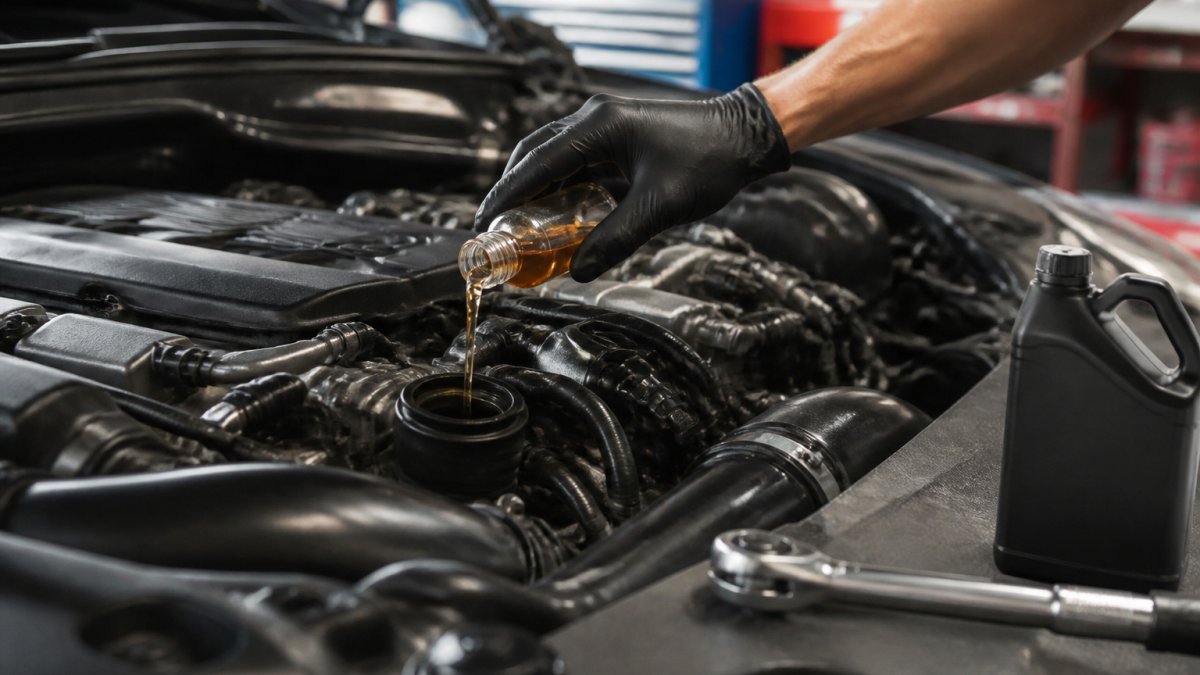
Shake the bottle, then pour it slowly into the oil filler neck using a funnel. Avoid spills on hot parts.
Step 4: Run and Monitor [Time: 5 minutes]
Let the engine idle, then take a short drive, watching oil pressure and listening for changes over the next few hundred miles.
Expected result: smoother operation, steadier oil pressure, and quieter running over the first few hundred miles.
Picking the Right VPO Liquid Boost for Your Build
The Boost Pros carries a VPO Liquid Boost for most builds. Here's how to choose:
| Product | Best For | Price |
|---|---|---|
| VPO Liquid Boost - STREET Oil Vitalizer | Daily drivers and weekend builds | $49.99 |
| VPO Liquid Boost - HOT ROD Oil Vitalizer | Modern and classic engines using heavier weight oils | $54.99 |
| VPO Liquid Boost - DIESEL Oil Vitalizer | Modern diesel engines and towing | $54.99 |
| VPO Liquid Boost - RACE Oil Vitalizer | Competition engines without catalytic converters | $59.99 |
Each uses a proprietary friction-modifying system proven in road and track use, enhancing horsepower, reducing operating temperatures, and improving fuel economy. All are non-chlorinated and work with mineral or synthetic oil.
If you're running a competition engine with no catalytic converter, the RACE formula is the pick. For everything else, start with STREET.
When Not to Use an Oil Vitalizer
An oil vitalizer isn't right for every situation. Skipping it in the wrong cases saves you money and protects your engine.
Don't add one when:
- Your engine has a mechanical fault, like knocking or low oil pressure
- Your oil is overdue for a change, since fresh oil comes first
- Your manufacturer explicitly warns against oil additives
If your engine is healthy and you want more protection, less wear, and steadier performance, that's where it earns its place. If something is already broken, fix that first.
Conclusion
Getting real protection from your engine means choosing the right product, not just any bottle on the shelf. The Boost Pros offers the VPO Liquid Boost line, including the STREET, HOT ROD, DIESEL, and RACE oil vitalizers, each with a proprietary friction-modifying system that reduces wear, lowers operating temperatures, and improves fuel economy.
Frequently Asked Questions
What benefits can oil vitalizer additives provide?
An oil vitalizer is a friction-modifying oil treatment designed to work alongside your existing oil. Documented benefits include reduced metal-to-metal contact, lower operating temperatures, improved fuel economy, and protection against viscosity breakdown, wear, and thermal or oxidative degradation caused by shear stress. VPO Liquid Boost, for example, is formulated to enhance horsepower and reduce operating temperatures in both road and track applications.
Do oil additives improve fuel economy?
They can help, but the gain depends on how much friction your engine currently loses and how you drive. A friction-modifying vitalizer reduces the drag between moving parts, which supports fuel efficiency and mileage over time. Treat it as a supporting improvement, not a replacement for correct tire pressure, clean injectors, or a sensible right foot.
Are oil vitalizer additives safe for all engines?
No single formula suits every engine. VPO Liquid Boost Street and Hot Rod work in modern and classic engines, while the Race version is intended for competition engines without catalytic converters. All VPO formulas are non-chlorinated and compatible with mineral and synthetic oils. Check your manufacturer's recommendation and warranty terms before adding any treatment.
How do you choose and use an oil vitalizer additive?
Match the product to your engine and use case: Street for daily-driven modern engines, Hot Rod for heavier-weight oils in classic builds, Diesel for modern diesel lubricants, and Race for competition engines without catalytic converters. Add it at your normal oil change, follow the bottle dosage, then monitor oil temperature, consumption, and noise over the following weeks. Independent testing and manufacturer guidance should inform your decision.