

Octane Booster for Modified Engines: A 2026 Guide
Table of Contents
- What Octane Boosters Do and How They Work
- Octane Rating, Knock Resistance, and Modified Engine Needs
- Octane Booster for Turbo Engines: Boost Pressure and Fuel Requirements
- Octane Booster for High Compression Engines: Preventing Detonation
- How to Use Octane Booster Safely and Effectively
- Octane Booster vs Race Fuel: Which Is Right for Your Build
- Does Octane Booster Actually Work? Real-World Performance and Limitations
- Choosing Between BOOSTane Products for Your Modified Engine
- Frequently Asked Questions
Last Updated: October 14, 2026
What Octane Boosters Do and How They Work
An octane booster for modified engines is a fuel additive that raises gasoline's octane rating, helping prevent engine knock and detonation in high-performance applications.
Octane boosters introduce compounds that resist premature combustion. When fuel ignites too early, it creates shock waves that damage pistons and reduce power output. Higher octane ratings delay combustion until the piston reaches the optimal position, letting the engine extract maximum energy from each cycle.
Most street-legal octane boosters use proprietary carrier systems that blend with pump gasoline. Professional-grade formulations like BOOSTane Professional can raise octane levels up to 116 at the correct dosage.

Dosage is critical. Most boosters require a specific ratio of additive to fuel volume. Underdosing leaves you vulnerable to knock; overdosing wastes product and can create carbon buildup or fuel system issues over time.
Octane Rating, Knock Resistance, and Modified Engine Needs
Octane rating measures fuel's resistance to detonation under pressure and heat. The pump octane number (R+M/2) averages two test methods: Research Octane Number and Motor Octane Number (D2700 Standard Test Method for Motor Octane Number of Spark-Ignition Engine Fuel).
A stock engine typically runs fine on 87-octane pump gas. But once you increase compression ratio, add a turbocharger, or install a supercharger, combustion pressure rises dramatically.
Octane doesn't equal horsepower. Higher octane fuel doesn't make your engine faster by itself; it allows your tuner to advance ignition timing without triggering knock, and advancing timing is what unlocks power.
Modified engine builders specify minimum octane requirements for a reason. A turbo engine tuned to 20 PSI boost might require 100 octane to run safely; push it to 25 PSI and you might need 104.
Octane Booster for Turbo Engines: Boost Pressure and Fuel Requirements
Turbocharging forces more air into the combustion chamber, raising peak cylinder pressure significantly. A modest 10 PSI setup can increase effective compression ratio by 2-3 points; an aggressive 20+ PSI build can push effective compression to 14:1 or higher, even on a 9:1 block.
More boost equals higher pressure equals higher octane demand. A street turbo car at 12 PSI typically needs 91-93 octane to avoid knock. Track builds pushing 18-25 PSI usually require 100+ octane, or they'll detonate under full throttle.
BOOSTane E85 Race Fuel offers a unique advantage for boosted applications. E85 (85% ethanol, 15% gasoline) has a Research Octane rating of 108.6 and provides chemical intercooling through latent heat of evaporation.
The trade-off with E85 is fuel system compatibility and tuning complexity. For street cars running occasional track days, BOOSTane Professional Octane Booster mixed with pump gas is often simpler.

Octane Booster for High Compression Engines: Preventing Detonation
High-compression engines are inherently knock-prone because combustion pressure is already elevated before the turbo or supercharger adds boost. A 12:1 compression naturally aspirated engine sits on the edge of detonation at part throttle, even on 91-octane pump gas.
Detonation damages engines in ways that aren't always immediately obvious. A single knock event might not destroy your engine, but repeated detonation over weeks or months wears piston rings, damages piston crowns, and erodes cylinder walls. This is why high-compression builds demand reliable octane protection.
For high-compression naturally aspirated engines, a quality octane booster mixed with premium pump gas often provides adequate protection. BOOSTane Premium Octane Booster works with all internal combustion engines and is street legal.
The key is consistency: use the same booster every fill-up. Switching between boosted pump gas, regular boosters, and premium fuel creates variability that makes tuning difficult and increases knock risk.
How to Use Octane Booster Safely and Effectively
Proper dosage is the foundation of safe octane booster use. Most boosters include mixing instructions on the label; BOOSTane Professional, for example, is formulated to raise octane levels significantly at the correct ratio.
Start by calculating your fuel tank capacity. Use the product's recommended dosage per gallon, then multiply by your tank size.
Add booster at every fill-up if you're running a modified engine that requires it. Octane rating degrades as fuel sits in your tank, slightly after a week, more after two. For track cars or frequently driven performance builds, topping up at every fuel stop is safest.
Monitor your engine for knock. Modern knock sensors detect detonation and trigger fuel cut or timing retard, killing power instantly.
Keep detailed records of what booster you're using, at what dosage, and how your engine responds. This data is invaluable for troubleshooting or communicating with your tuner.
Octane Booster vs Race Fuel: Which Is Right for Your Build
Octane booster offers convenience and flexibility. You can use it with any pump gas, switch between boosters, and adjust your octane level by changing dosage or brand. For street cars that only occasionally see track time, run regular 87-octane pump gas on street drives, then add booster for track events.
Race fuel, by contrast, is a complete formulation designed for maximum performance under extreme conditions.
BOOSTane PROFESSIONAL Octane Booster →
The trade-off is cost and practicality. Race fuel costs significantly more than pump gas plus booster: BOOSTane 116 Octane Race Fuel runs around $116 per container, while BOOSTane Professional Octane Booster costs $29.99 and mixes with affordable pump gas.
Another consideration is fuel system compatibility. Leaded race fuel requires components rated for that fuel and can damage oxygen sensors and catalytic converters on street cars. BOOSTane 109 Octane Race Fuel is unleaded and oxygenated, making it more compatible with modern fuel systems, but it still requires a dedicated fuel system or careful storage and use.

For most modified street cars, a quality octane booster for modified engines mixed with premium pump gas is the practical choice. For dedicated track cars or extreme builds, race fuel provides unmatched reliability. BOOSTane offers both.
| Fuel Option | Cost per Use | Octane Level | Best For | Compatibility |
|---|---|---|---|---|
| Pump gas + booster | Low | 91-104 | Street cars, weekend track days | All fuel systems |
| BOOSTane 109 Race Fuel | High | 107 | Moderate boost, track days | Modern fuel systems |
| BOOSTane 116 Race Fuel | High | 117 | Extreme builds, drag racing | Dedicated race fuel systems |
| BOOSTane E85 Race Fuel | Moderate | 108.6 | Heavily boosted engines | E85-compatible systems |
Does Octane Booster Actually Work? Real-World Performance and Limitations
Octane booster works exactly as advertised when used correctly: it increases fuel octane and prevents knock. The limitation isn't whether it works, but understanding what it can and cannot accomplish.
An octane booster cannot fix a fundamentally over-boosted or over-compressed engine.
An octane booster cannot replace proper tuning. If ignition timing is set too aggressively for your fuel octane, knock will occur regardless of booster quality. A professional tune matching your fuel octane and boost level is the foundation; booster is insurance, not a substitute.
An octane booster works best as part of a complete strategy. Know your engine's compression ratio, boost level (if turbocharged), and the ignition timing your tuner has programmed. Match your fuel octane to those parameters for reliable knock-free operation.
Real-world results depend on application. A street car running modest boost and reasonable compression will see reliable knock prevention and stable power delivery.
Choosing Between BOOSTane Products for Your Modified Engine
The Boost Pros offers three primary octane solutions for different applications and performance levels.
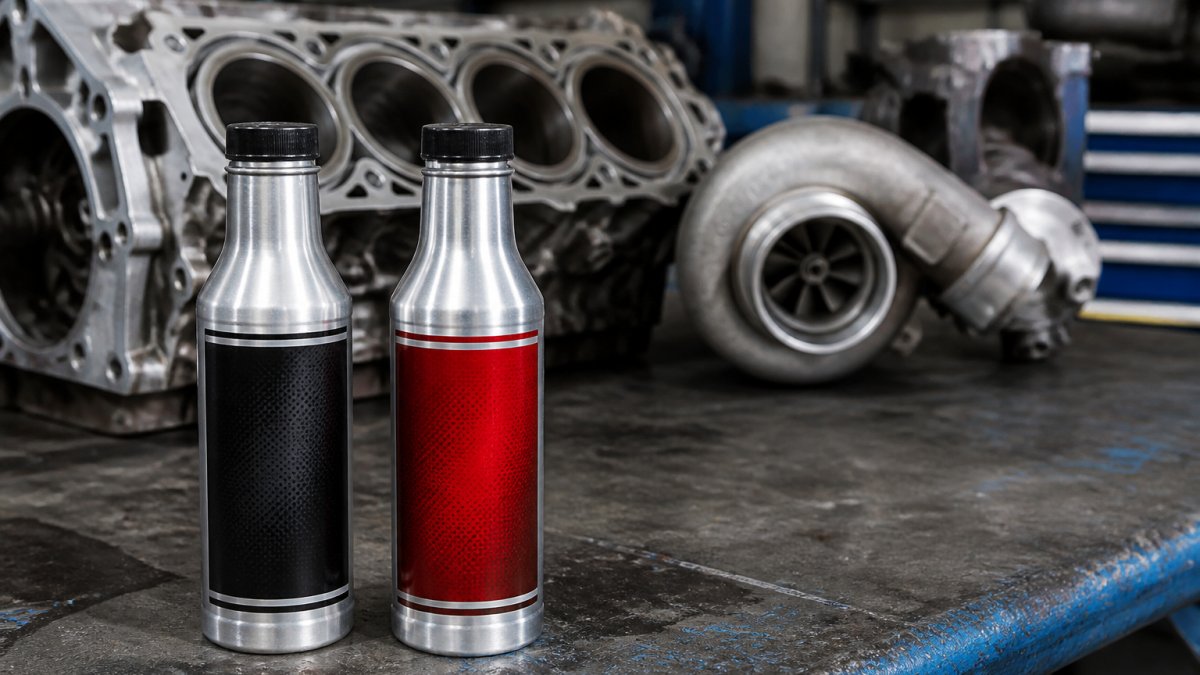
BOOSTane Premium Octane Booster is street legal and works with all internal combustion engines. At 16 fl oz per can for $21.99, it's the most affordable option for street cars and weekend track enthusiasts.
BOOSTane Professional Octane Booster is formulated for serious racers and track-focused builds. At 32 fl oz per can for $29.99, it raises octane levels up to 116 at the correct dosage.
BOOSTane 109 and 116 Octane Race Fuels are complete formulations for engines that demand uncompromising performance. The 116 Octane Race Fuel ($116.00) is leaded and non-oxygenated, rated for extreme high-compression and high-rev applications up to 16:1 compression at 9,500 RPM.
Your choice depends on your engine's specifications and intended use. A street car with mild turbo boost and 10:1 compression benefits from BOOSTane Premium mixed with pump gas.
Choosing the right octane solution for your modified engine requires understanding your power output, boost level, and compression ratio.
Frequently Asked Questions
Does octane booster actually work on a modified engine?
Yes, but only if your engine is experiencing knock or running ignition timing that has been retarded to prevent detonation. Octane booster increases fuel stability and knock resistance, allowing your tuner to advance timing closer to the engine's optimal point. On a properly tuned modified engine already running the correct fuel, booster adds minimal benefit. On a turbo or high-compression build running pump gas, it can recover lost power by preventing the ECU from pulling timing to protect against knock.
How much octane booster should I add to my fuel tank?
Follow the product instructions carefully. Most octane boosters, including BOOSTane Premium, are designed to treat a specific fuel volume. Exceeding recommended dosage does not proportionally increase octane and can damage fuel injectors or oxygen sensors. Underdosing wastes money without solving knock. Start with the exact dose recommended for your tank size, then monitor knock sensors and engine behavior before adjusting.
Should I use octane booster or race fuel for my modified engine?
Race fuel is superior if your modification requires it and you can access it reliably. BOOSTane 116 Octane Race Fuel (117 R+M/2) and 109 Octane Race Fuel (107 R+M/2) provide consistent, higher octane without additives, plus optimized combustion efficiency for high-compression and turbocharged builds. Octane booster is practical when race fuel is unavailable, you drive street cars occasionally, or your engine only needs a modest boost in knock resistance. For serious track-only vehicles, race fuel eliminates guesswork.
Can I use octane booster instead of retuning my engine?
No. Octane booster is not a substitute for proper tuning. A professional tune optimizes ignition timing, fuel injection, and boost pressure for your specific modifications. Octane booster only prevents knock at the current tune. If your engine is detonating, the root cause is usually over-aggressive timing or boost pressure for the fuel grade. Booster masks the symptom; tuning fixes it. Always tune first, then use booster if needed for additional safety margin.
Is octane booster safe for modern engines with oxygen sensors and catalytic converters?
Quality octane boosters formulated for modern engines, like BOOSTane Premium, include anti-corrosion additives that protect against ethanol and are compatible with oxygen sensors and catalytic converters when used at recommended dosage. However, overuse or low-quality products can damage these components. Always verify the booster is compatible with your vehicle's emissions system, follow dosing instructions exactly, and avoid non-street-legal formulations on street-driven cars. BOOSTane Professional is not street legal and should only be used in race-only applications.
What octane rating does a turbocharged engine need?
Turbocharged engines typically require 91-93 octane pump gas, or higher if heavily modified. Boost pressure compresses the air-fuel mixture, raising combustion temperature and knock risk. A stock turbo car may run safely on 91 octane; a tuned or high-boost build may need 93, 98, or race fuel (109+). Your tuner will specify the minimum octane required. If pump gas causes knock, octane booster can help, but race fuel or ECU retune is often the better solution for serious builds.
Will octane booster raise 93-octane fuel enough for a high-compression engine?
Octane booster can raise 93-octane pump gas by 2-4 points, reaching approximately 95-97 octane depending on the booster's formulation and dosage. For moderately high-compression engines (10:1 to 11:1), this may be sufficient to prevent knock. For extreme compression ratios (12:1+) or heavily modified engines, 93 plus booster may still fall short. BOOSTane race fuels (109 or 116 octane) are more reliable for extreme builds. Test with a knock sensor or work with your tuner to determine if booster alone meets your engine's requirements.
What is the difference between pump gas, octane booster, and race fuel?
Pump gas (87-93 octane) is street-legal and widely available but may not meet high-performance engine needs. Octane booster is a fuel additive that increases octane by a few points and works with pump gas; it's convenient but less predictable. Race fuel (BOOSTane 109 or 116 octane) is formulated specifically for high-performance engines with optimized combustion efficiency, consistent octane, and additives for engine protection. Race fuel is not street-legal in most regions. For modified engines, race fuel is the most reliable choice; booster is a practical alternative when race fuel is unavailable.